How to Plan a Catering Menu for Your Event (Framework Included)
The biggest menu-planning mistake is picking dishes before defining the event's shape. A 200-guest cocktail evening needs a completely different menu structure than a 400-guest seated wedding lunch — even if the guest count and budget are similar.
This is the framework we use with clients at Sukhdev Caterers before we ever discuss dishes.
Step 1: Define the event shape
Guest count, event duration, service style (buffet vs plated vs live counter), and function type set the constraints. Everything else follows.
Rule of thumb: buffets serve 60–80 guests per line per hour. If you have 400 guests and a 90-minute dinner window, you need at least three buffet lines running in parallel — not one long line.
Step 2: Build the anchor sections
Welcome drinks + starters — 2 hot + 1 cold, or 3 hot for evening events. Never fewer than 2 vegetarian starters.
Chaat / salad counter — one is enough, but must be well-run.
Main course — 2 gravies + 1 dry + 1 dal + 1 rice preparation + breads. For multi-cuisine, add one dish from a second cuisine (a pasta or a Chinese noodle).
Desserts — 3 desserts including one live (jalebi-rabdi, live gulab jamun, or a live ice cream/paan counter).
Step 3: Add cuisines with intent
Multi-cuisine sounds bigger and better, but each added cuisine needs a chef who owns it. Two authentic cuisines beat five diluted ones. If you're adding Italian, add a live pasta counter — not sad boxed pizzas on a buffet.
Step 4: Layer dietary needs early
Jain, vegan, no-onion-no-garlic and allergen-specific meals must be planned into the menu from day one, not added as an afterthought. That means a separate prep line, separate serving spoons, clear labelling.
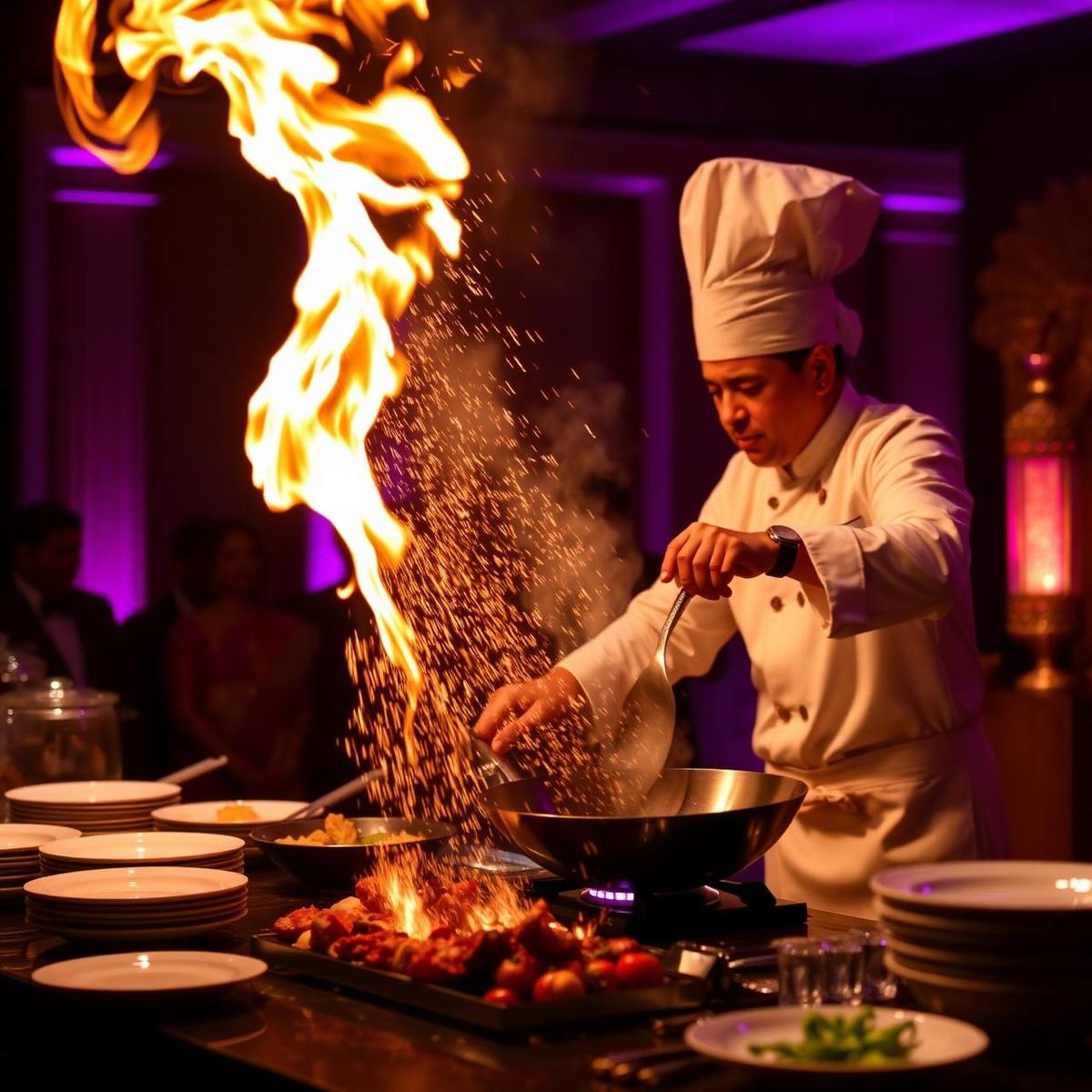
Step 5: Right-size the live counters
Live counters make the event, but too many spread guests thin. A rough rule: one live counter per 80–100 guests. Beyond that, add a second, but keep the first well-stocked and manned. See our live counters guide for the full menu of options.